Prototyping and testing
Constructing rigs and prototypes to varying levels of fidelity at appropriate points in the development cycle reduces risk.
Testing on these rigs and prototypes allows us to evaluate technology or provides evidence of the design’s performance before further time and financial investment are committed to the project.
Technology demonstrators
Sometimes an early demonstrator is required to evaluate a particular technology, or to validate a product concept with potential customers.
We created such a functional demonstrator for the Fuse smart consumer unit, which went on to win both a Red Dot Concept Award and a Braun Prize Award.
Similarly on a recent client project, we created a visually representative, partially functional electromechanical demonstrator device in just 14 weeks with bespoke casework, PCBA, drive train and embedded software. This was then used highly successfully to support exploratory sales meetings with target user groups.
Proof of Principle and Proof of Concept prototypes
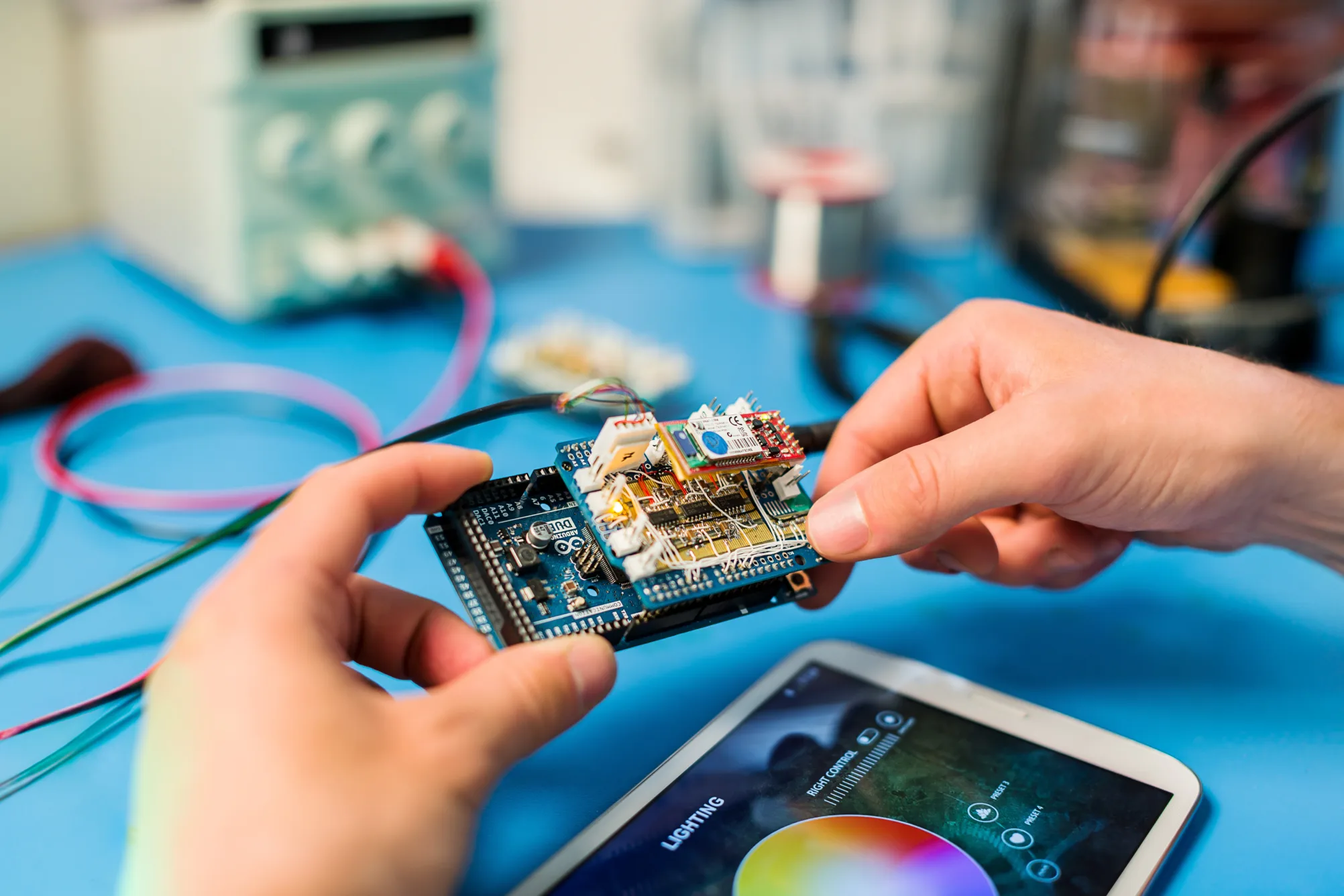
The fidelity of prototypes increases as we move through the project. We generally start with a Proof of Principle benchtop test rig constructed from manufacturer development boards and custom electronics, hand built in-house at DCA. Examples of such Proof of Principle prototypes can be seen in the electronics team’s work for the Lifefuels smart nutrition bottle and the Bentley Mechanical Marvel. These early rigs and prototypes allow us to prove out the circuit architecture and to create a platform for early software development.
As the project progresses, we will normally construct a number of iterations of Proof of Concept prototypes, homing in on the final production design intent.
Integrating in-house and external facilities
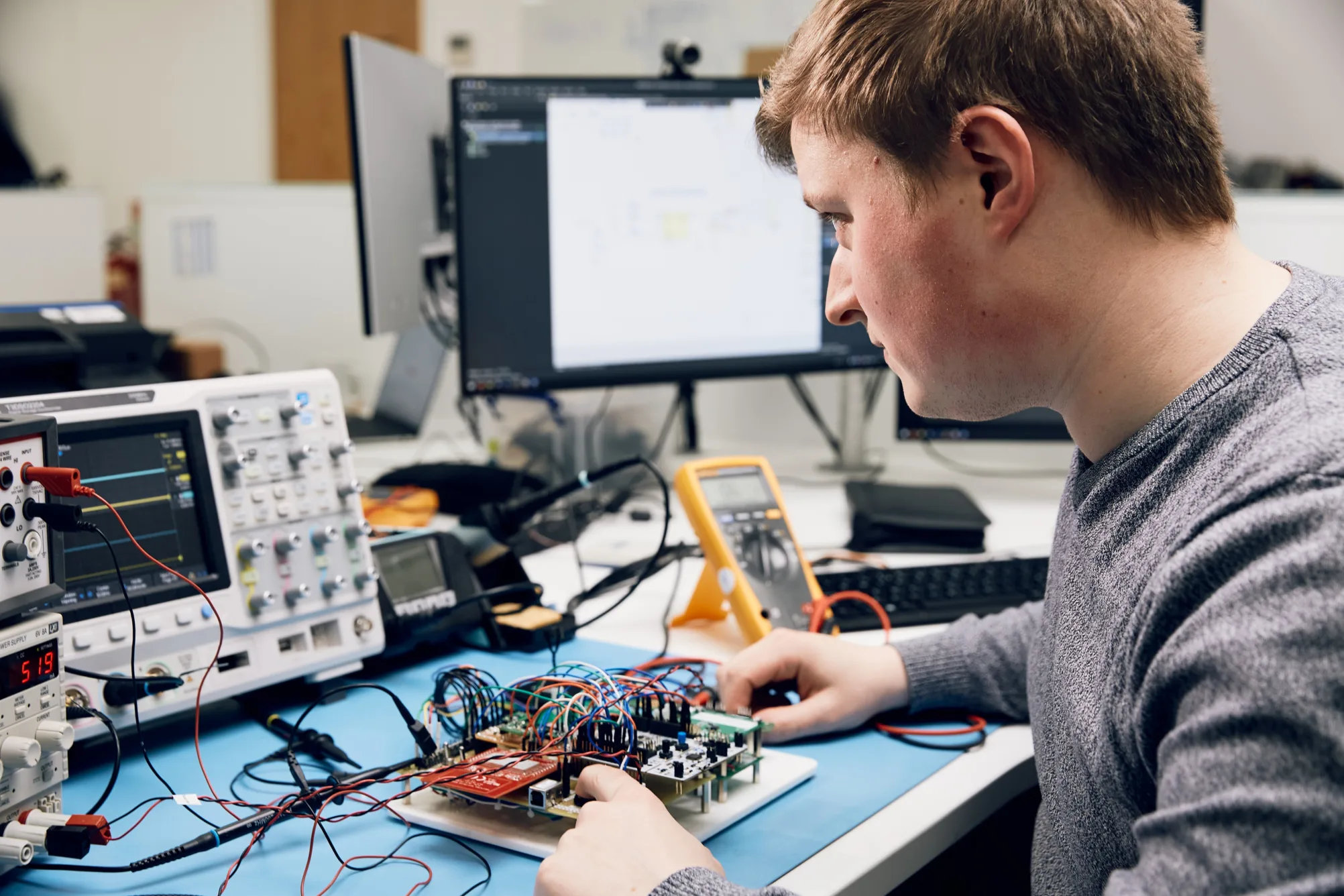
We have well-established, long-term links with preferred PCBA suppliers and have developed close co-operative ways of working and exchanging data for fast component procurement and turnaround of prototype boards.
To complement this for internal builds where possible or rework where required, in addition to standard hand soldering and hot air tools, our in-house electronics lab is fully equipped with a reflow oven and a semi-automated surface mount rework station, which allows the precise placement of even the smallest components and controlled soldering/de-soldering in the very densely packed circuit layouts that we are normally asked to develop.

Test planning
A well-planned test programme identifies the key requirements from the relevant specifications and establishes an effective and efficient means of testing and proving the design’s performance against these requirements.
Intelligently planning the test programme means balancing risk against target product launch dates and development costs. Safety-critical applications will require traceability between requirements and test results, which we can support via our quality procedures and integrity management system.
Testing performance against identified requirements
In-house electronic development testing
Most electronic development testing at DCA is performed in-house by our design engineers.
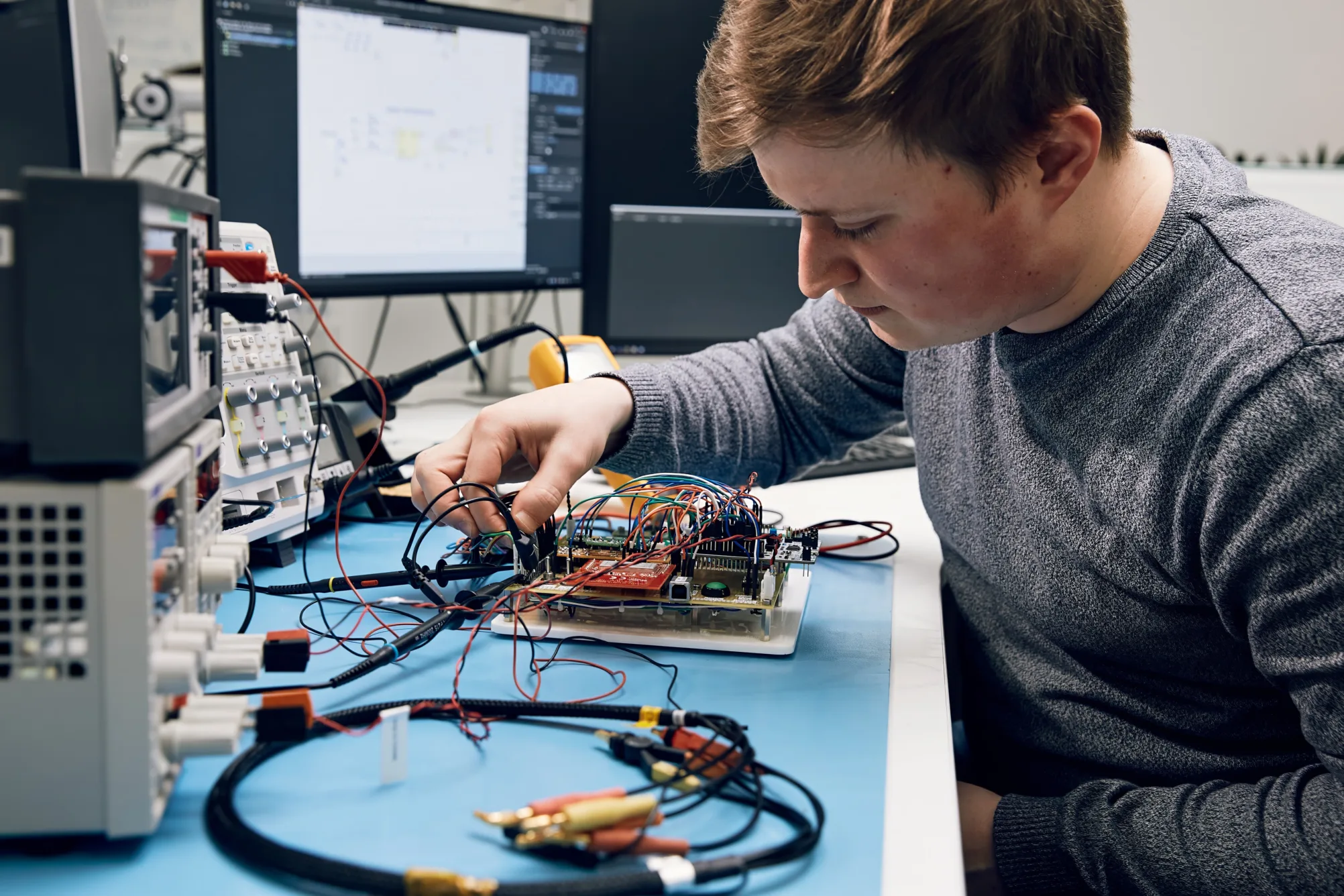
We have invested in laboratory test equipment and environments, including computer controlled environmental chambers, nanoamp-scale current measurement, electrostatic discharge simulation and standard baseband and RF instruments to perform testing in-house where possible, avoiding potential delays, retaining flexibility and control and maintaining confidentiality.
We write hardware requirements with testing and design verification in mind. Where required, we implement full traceability between requirements and test results via our quality procedures and life cycle management system.
Pre-compliance testing
Undertaking the right level of pre-compliance testing on early prototypes reduces the risk of failures later in the process, when they are more costly and time-consuming to resolve.
We include initial, exploratory testing early in the programme. We have worked with local test facilities and our customers’ preferred test facilities, both in the UK and abroad.
We can support testing by placing one of our engineers on-site at the test house. This helps to streamline the set up and operation of our prototypes during the testing, but more importantly it means that we are on hand to monitor the testing and to act quickly and pro-actively if issues are found. With the right expertise at the test facility, problems can usually be diagnosed or even fixed interactively on the test day, avoiding the need to return for a second visit to repeat the test programme on modified hardware.

Bespoke development and production test rigs
Many products require some form of bespoke development or production test equipment, which your selected manufacturing partner may not be able to provide.
We undertake the design and delivery of custom electromechanical test rigs for projects varying in complexity from simple solutions based around off-the-shelf components to those requiring custom electronic hardware and software. We have worked with manufacturers to qualify these test tools and integrate them into production, ranging from measuring resistance to a fraction of a milliohm, to delivered air flow rates and aerosol qualities.